Drape
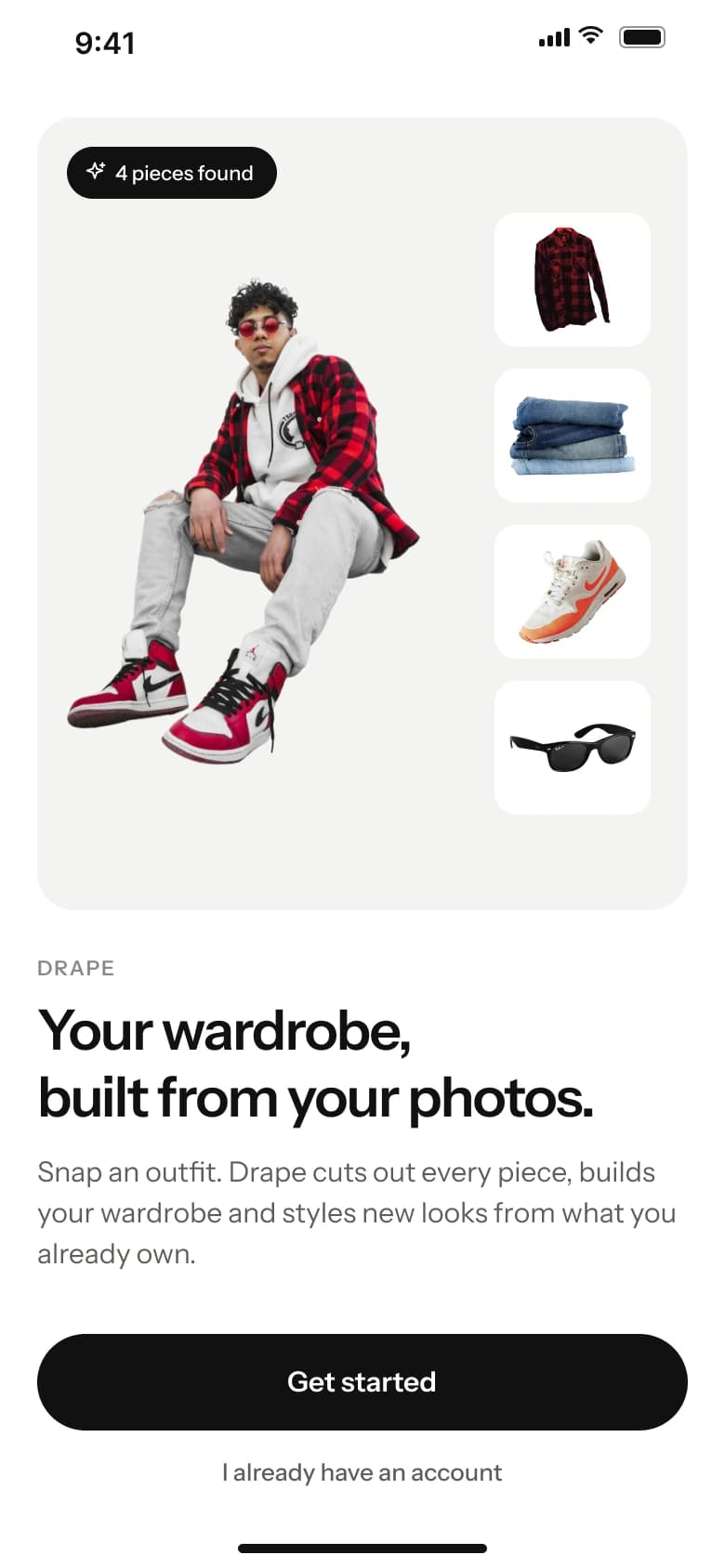
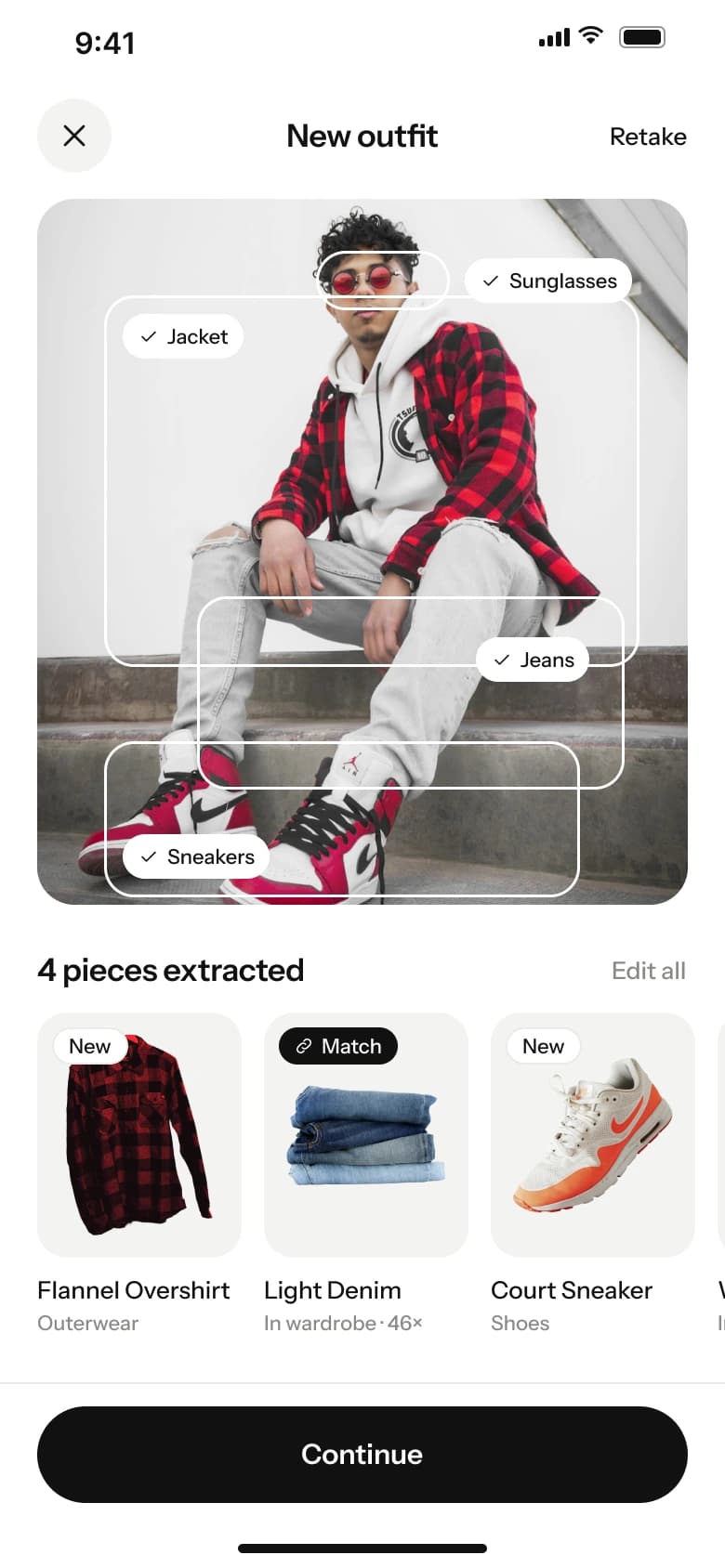
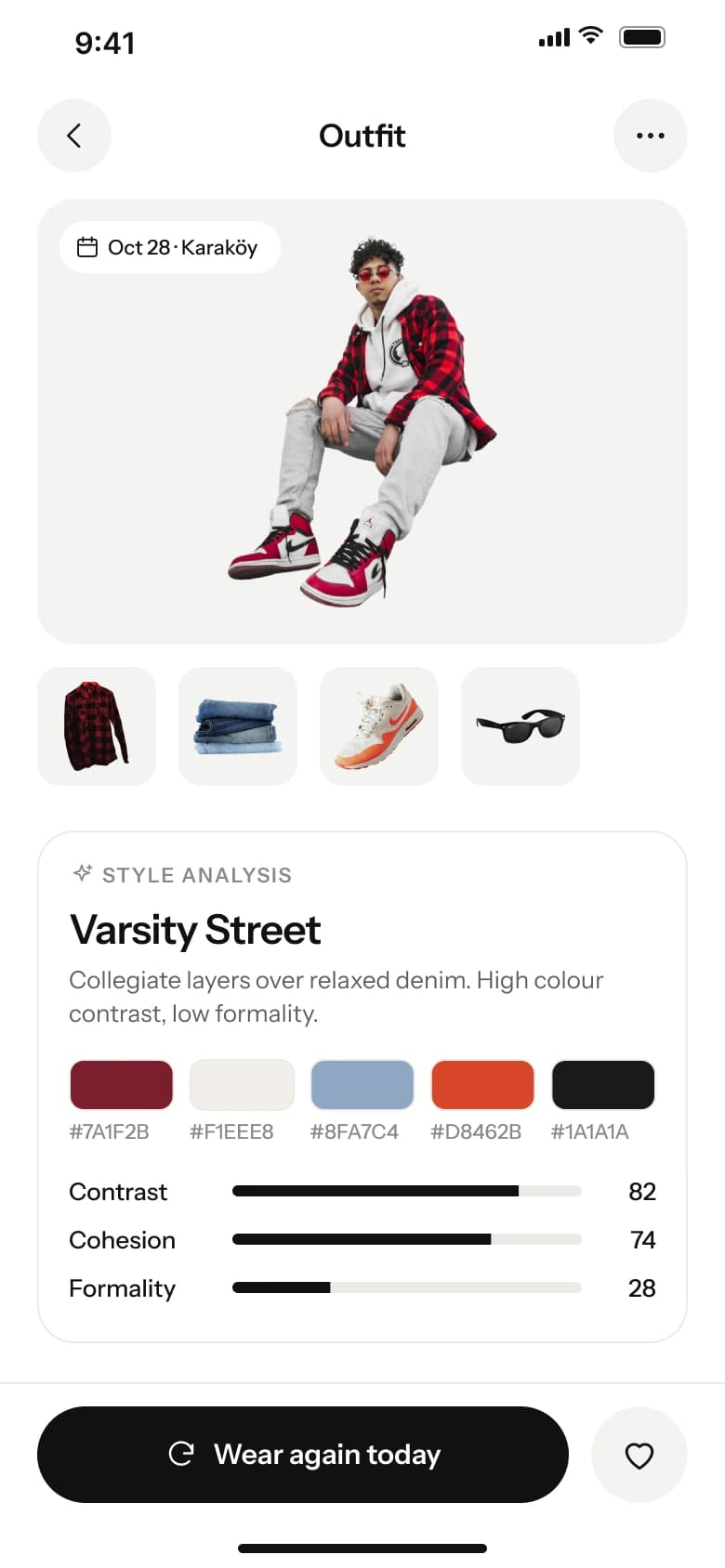
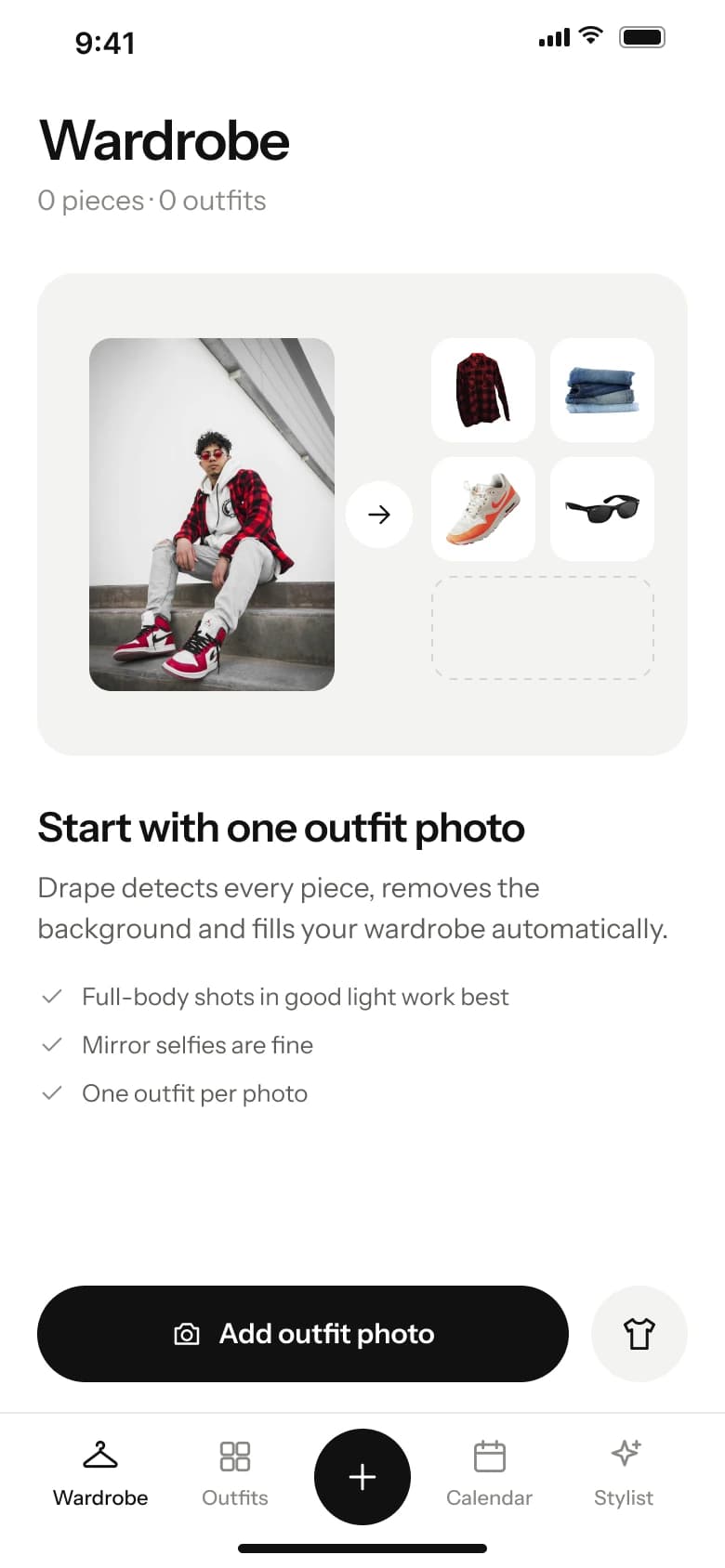
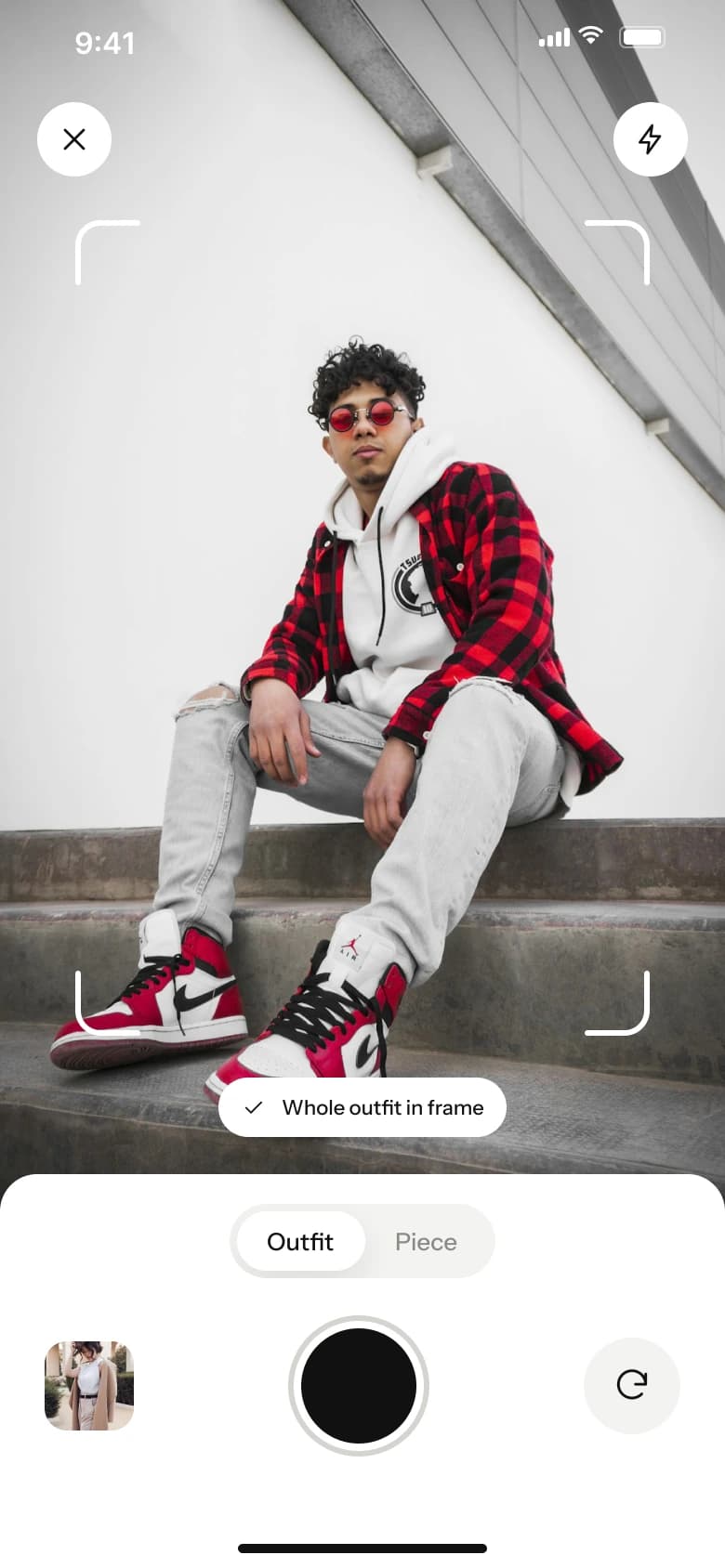
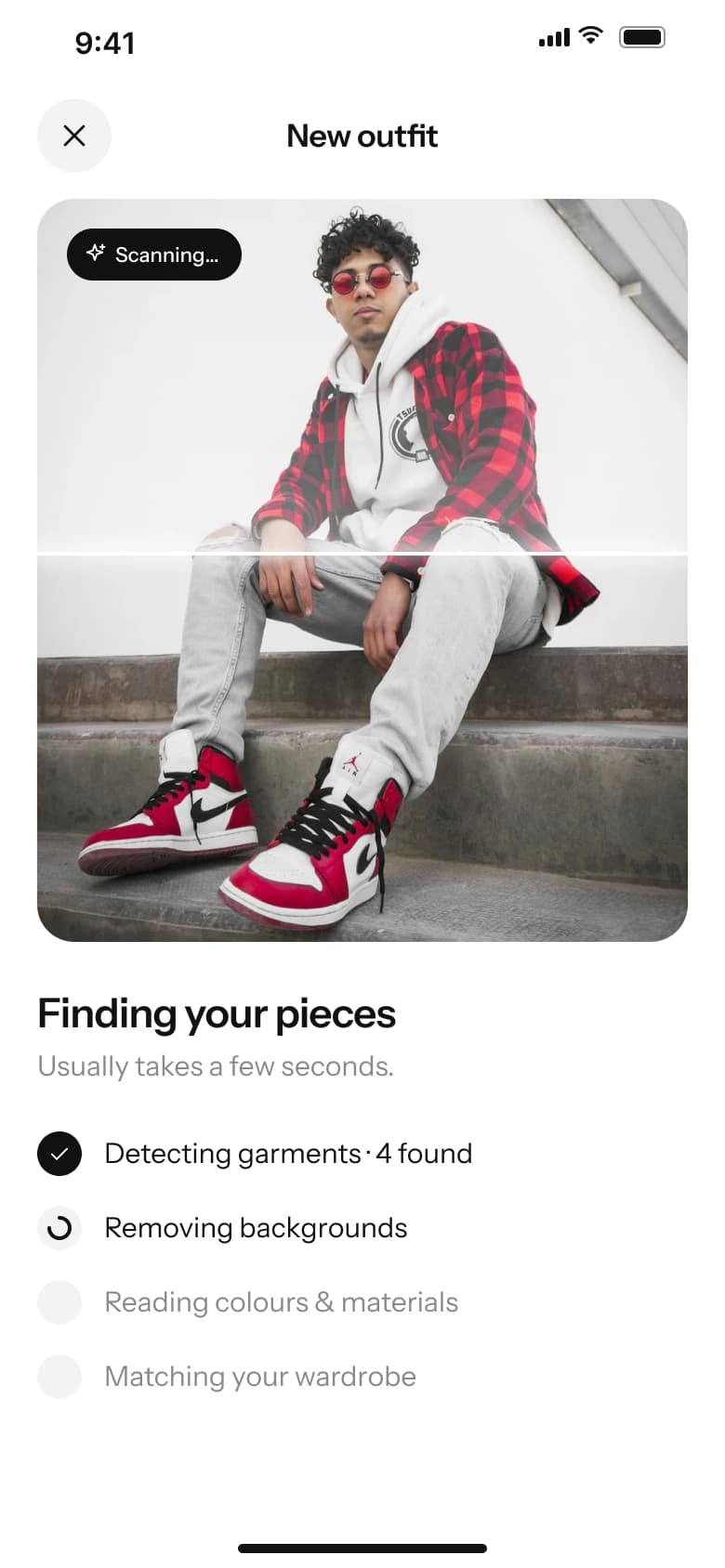
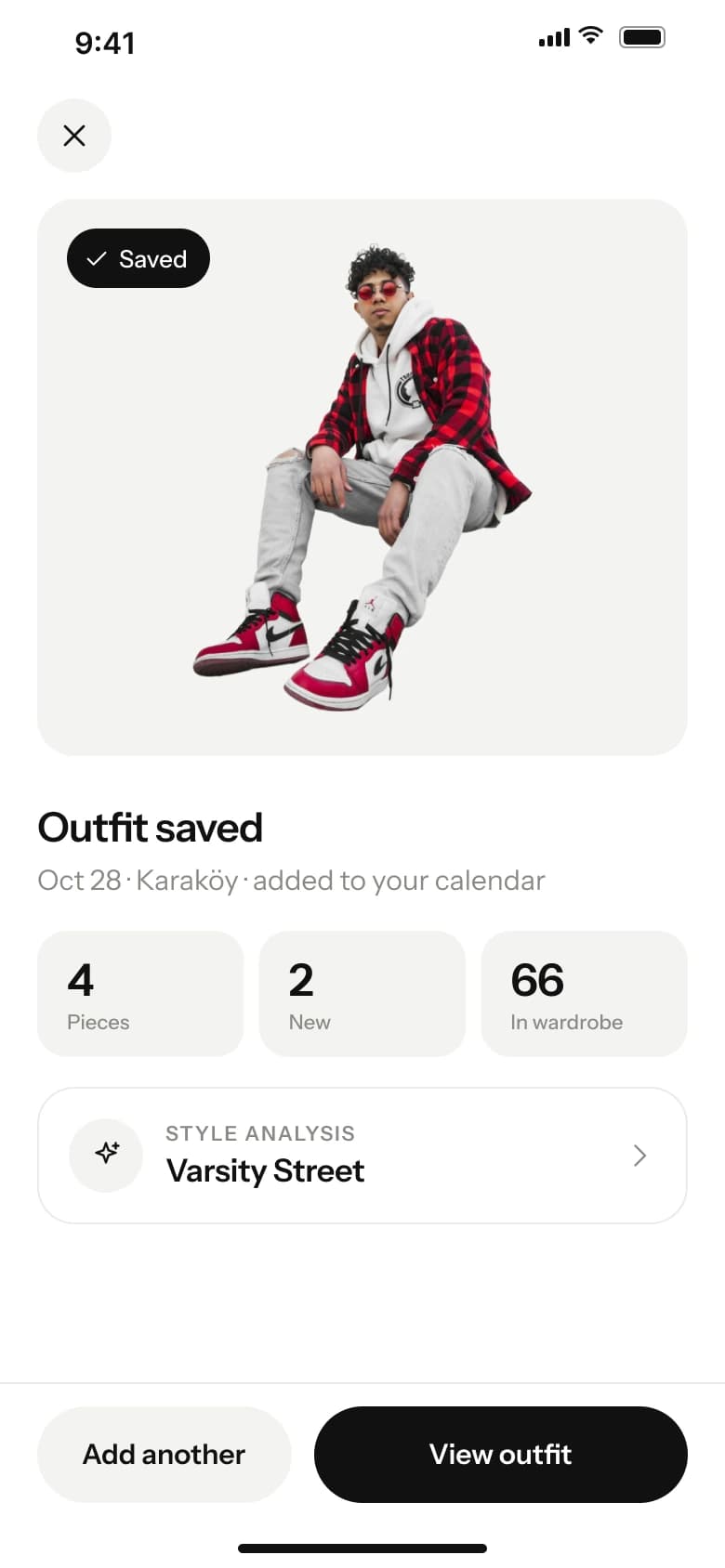
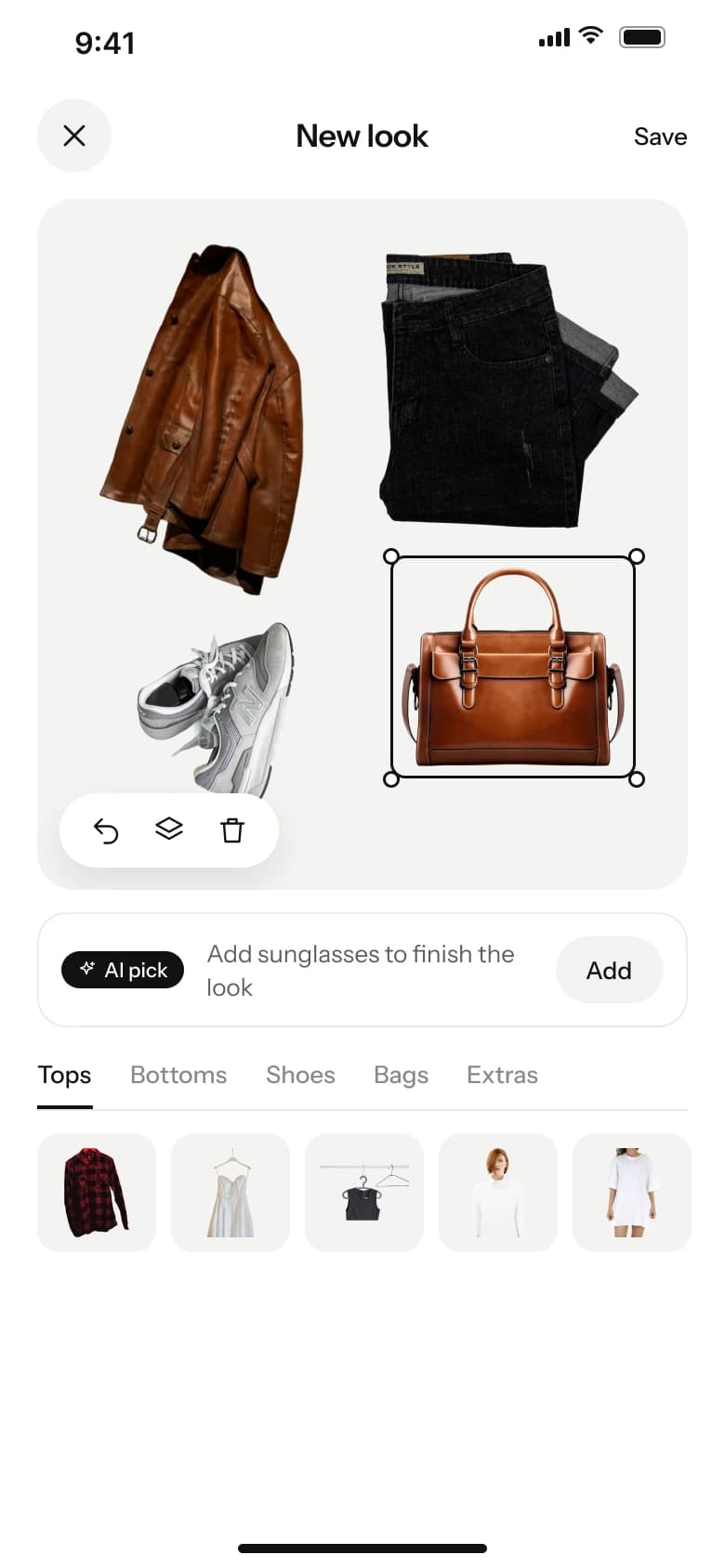
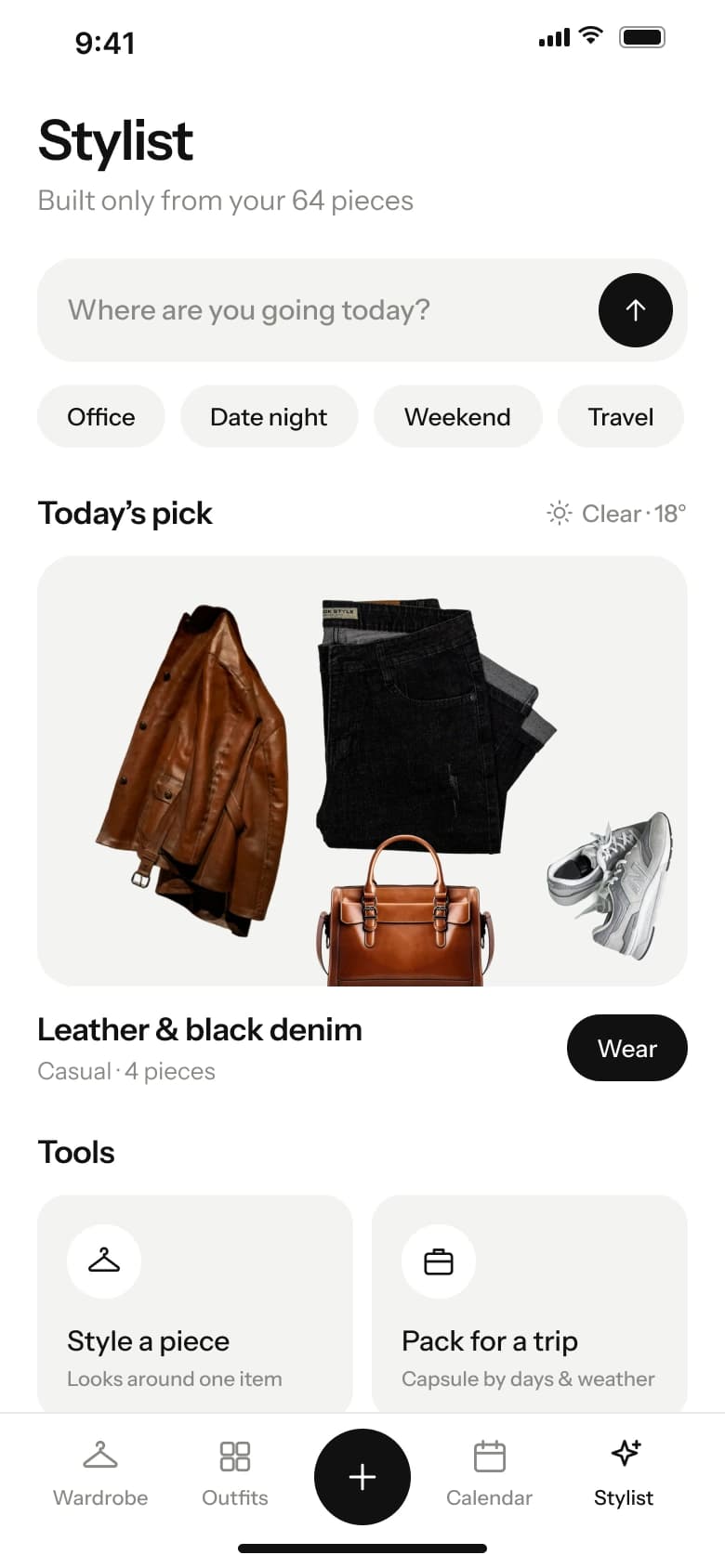
A personal AI wardrobe. Snap an outfit and Drape cuts out every piece, builds your digital wardrobe, logs what you wore and styles new looks only from what you already own.
- Role
- UX/UI & design system
- Year
- 2026
- Platform
- iOS

01
The idea
Most of us wear a fraction of what we own, and nobody wants to catalogue a closet by hand. Drape turns the photos people already take — mirror selfies, outfit shots — into a wardrobe that builds itself, then uses it to answer the daily question: what should I wear?
02
What I did
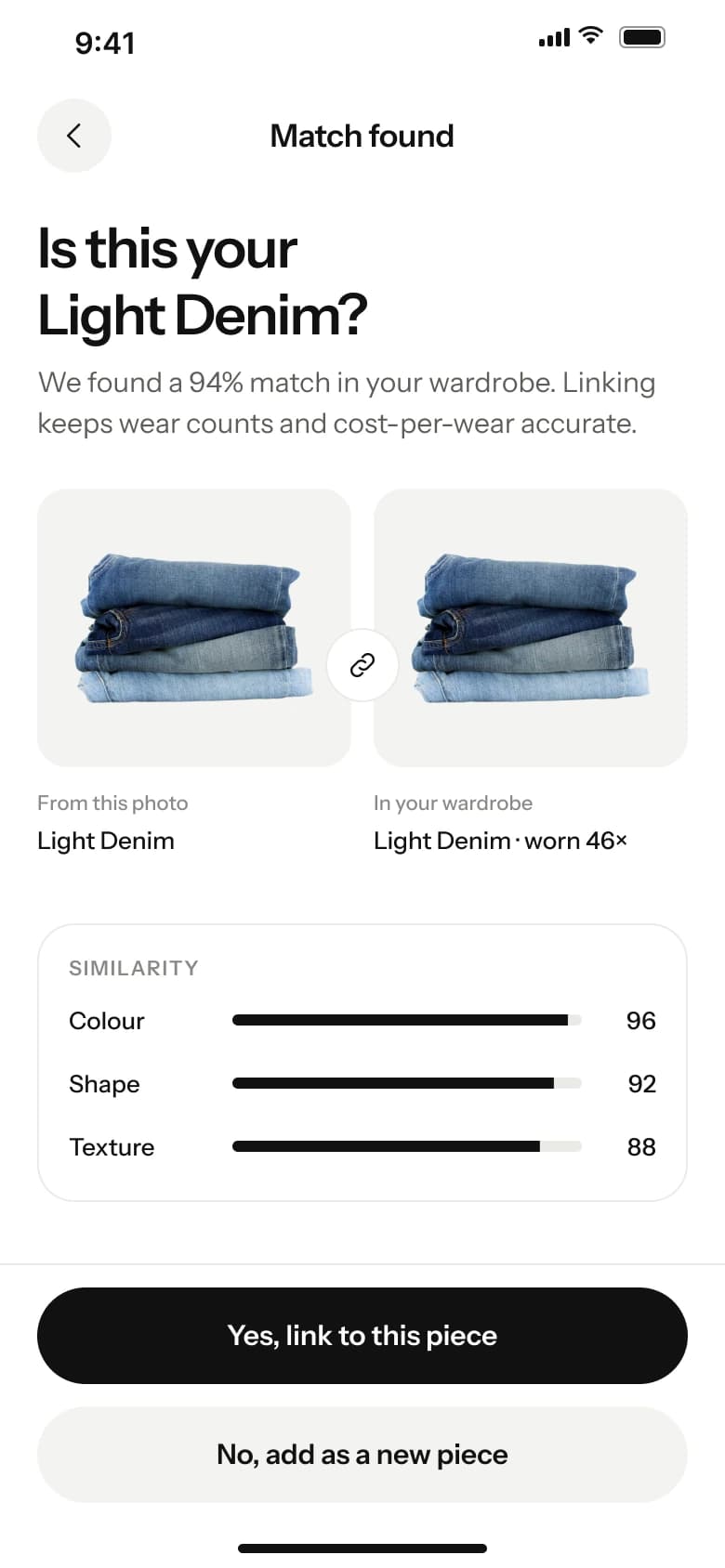
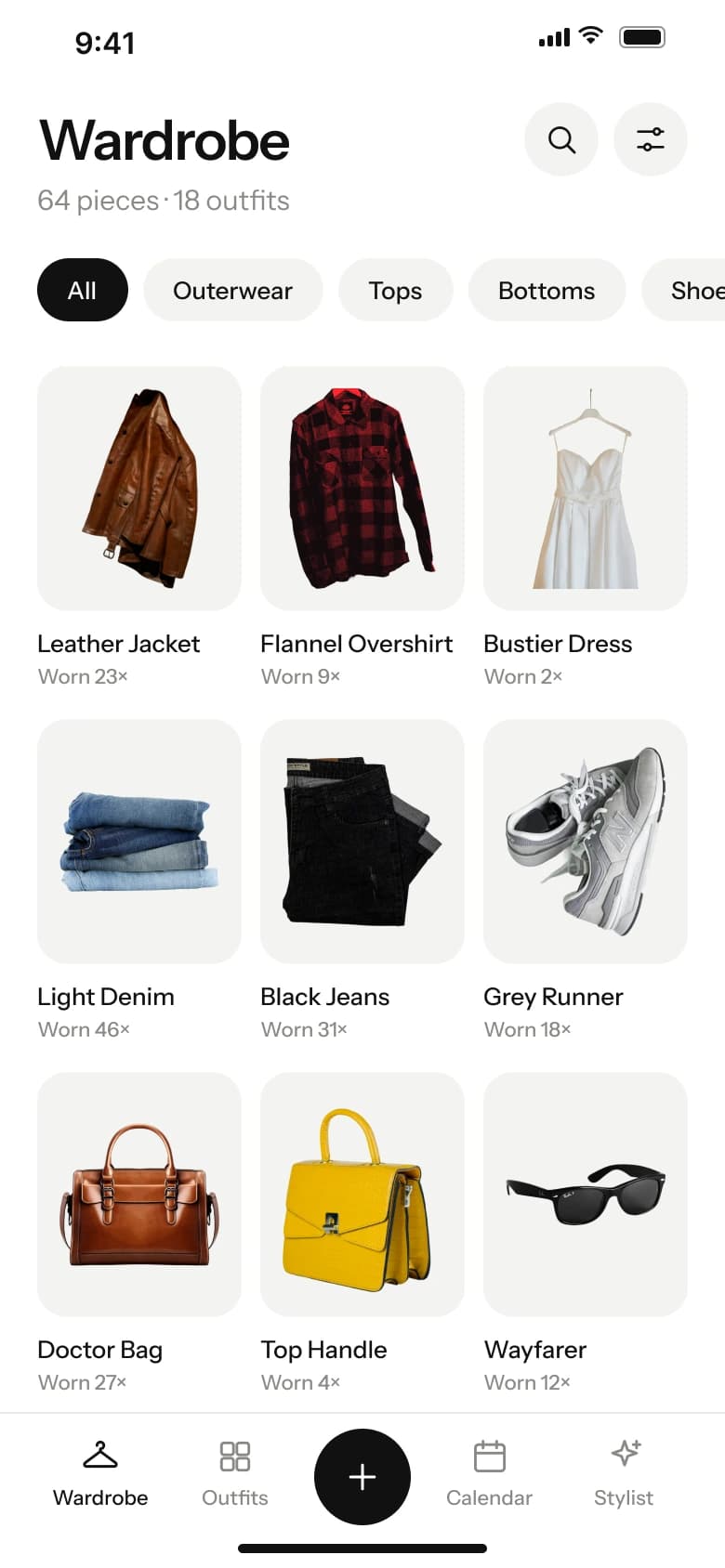
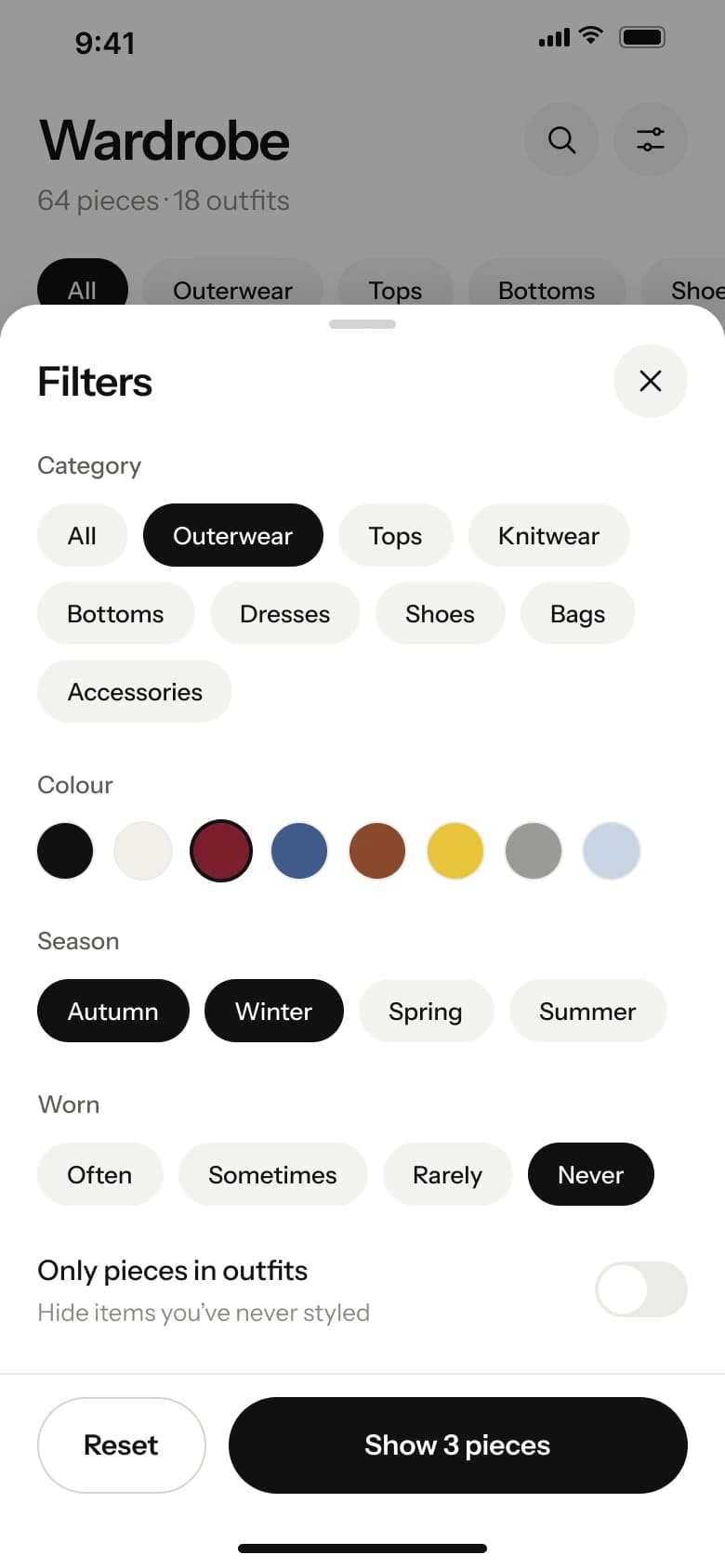
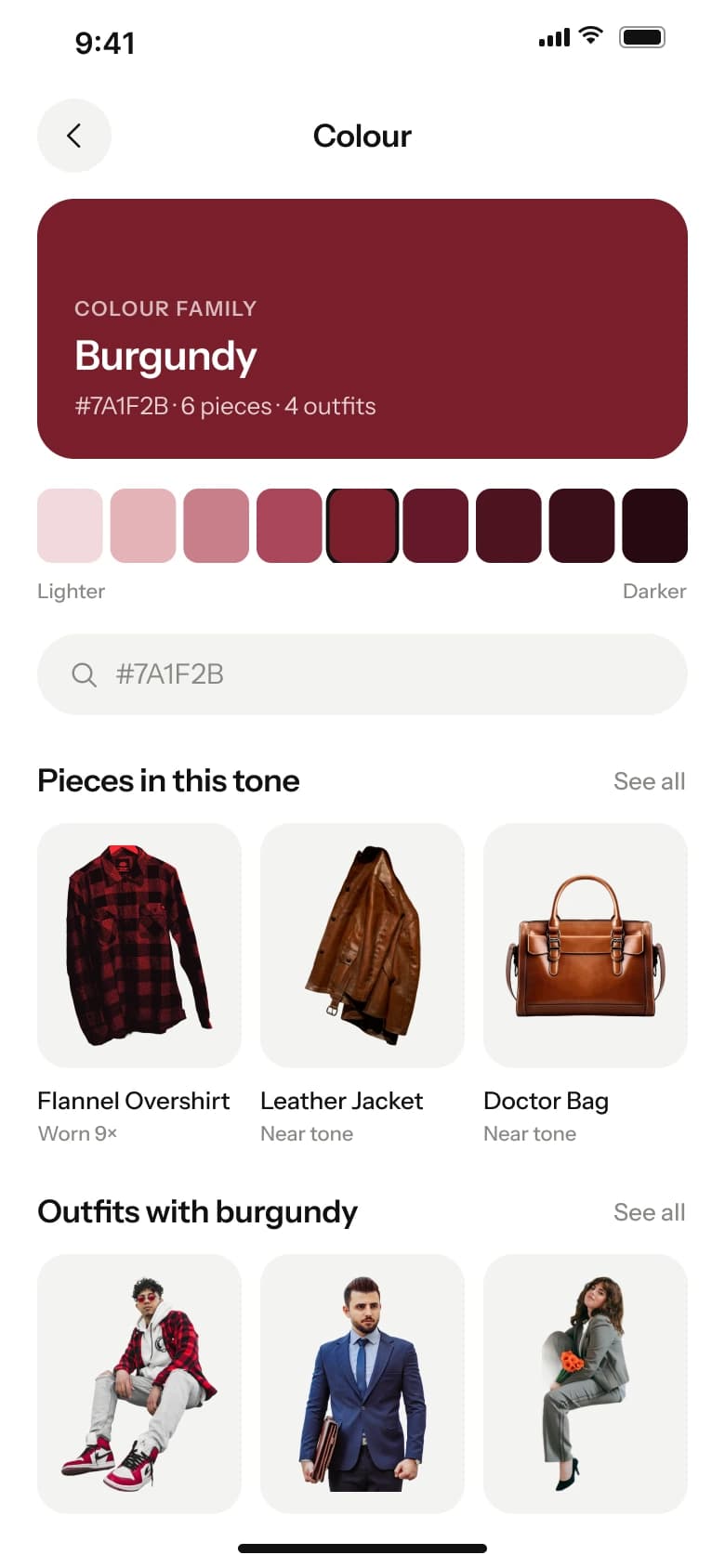
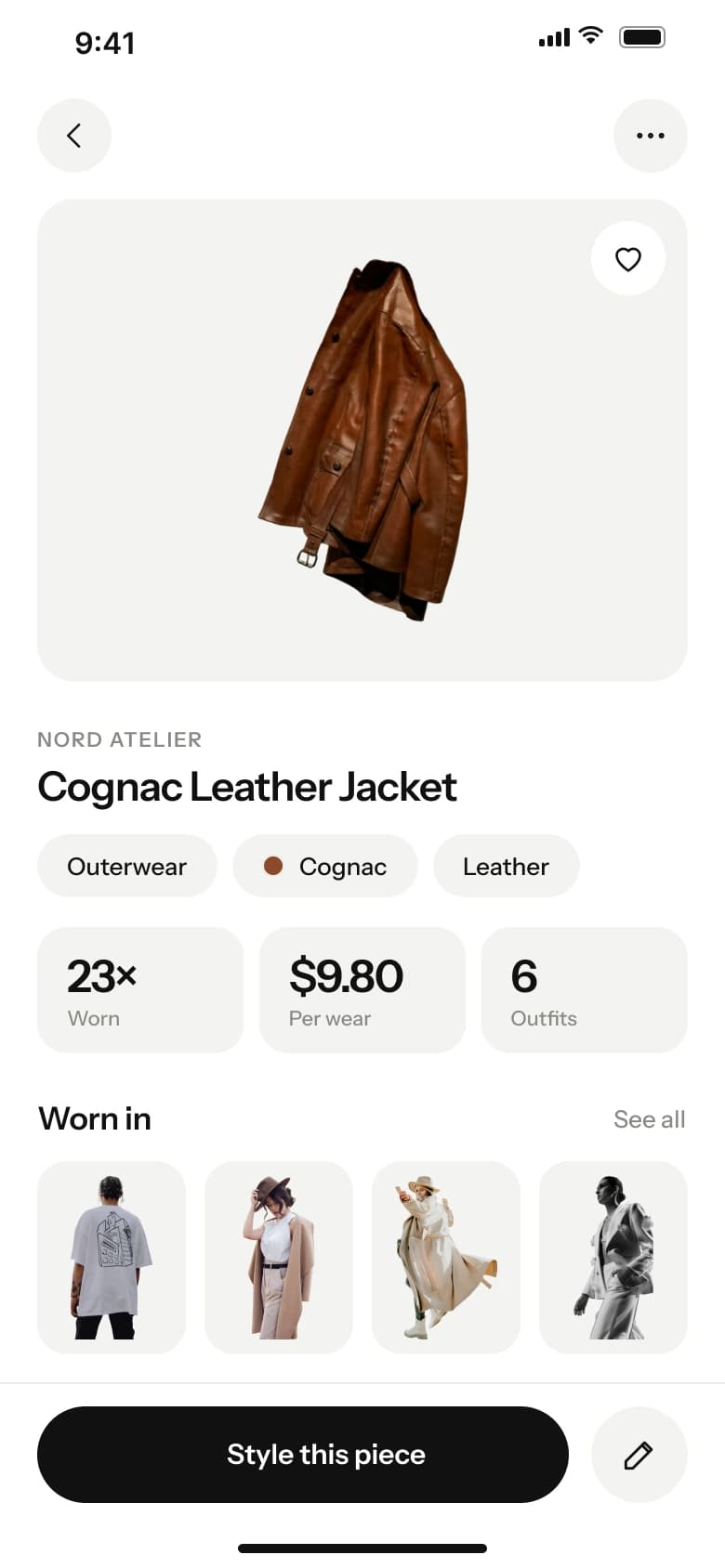
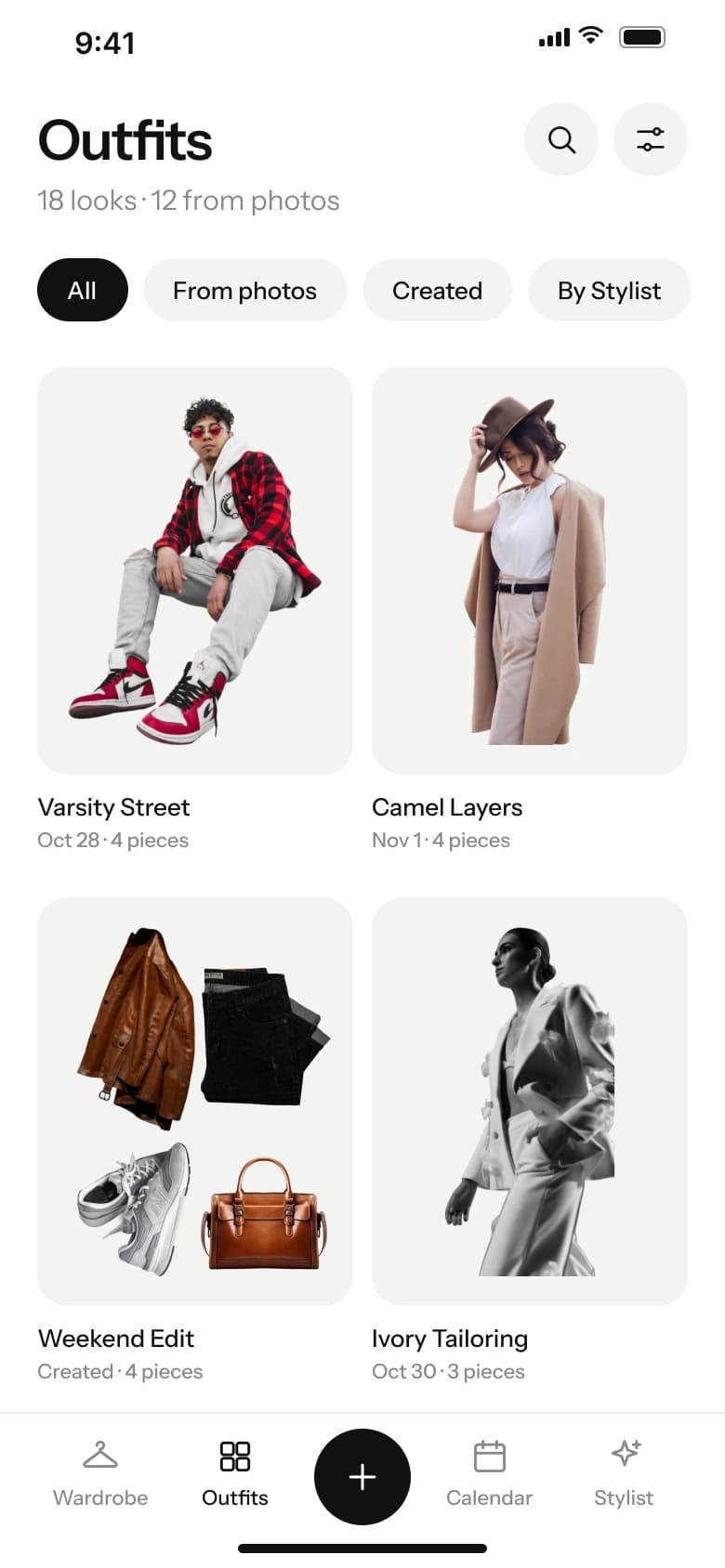
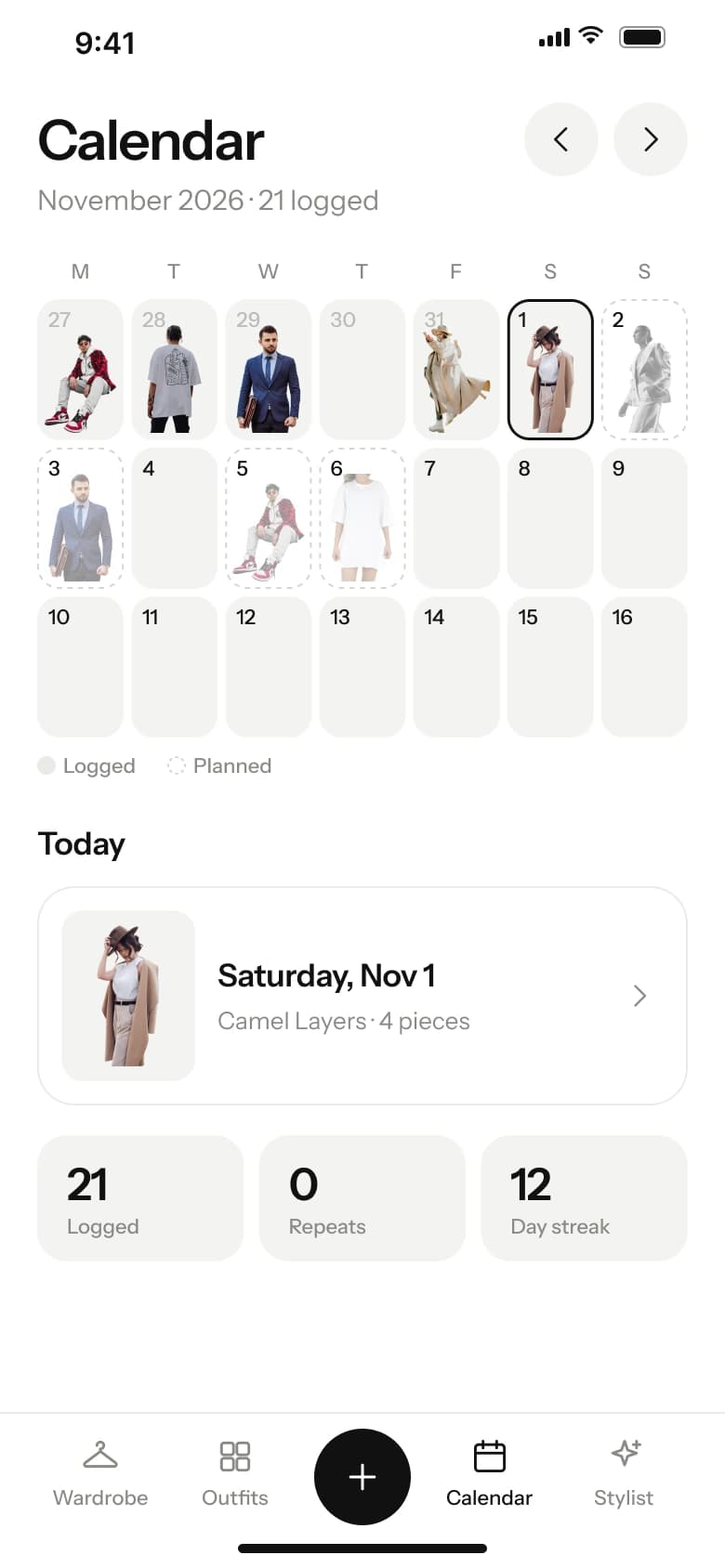
I designed the product end to end: concept exploration, information architecture, a token-based design system (colour and spacing variables, 11 text styles, 16 components, 38 icons) and 26 iOS screens across onboarding, AI extraction, wardrobe, outfits, calendar, stylist and insights.
03
Research & inspiration
I studied Lekondo, Whering, Alta, Doji and Zara on Mobbin and Pinterest. The strongest apps let the clothes lead and keep the interface quiet; the weakest bury garments under brand colour. Lekondo’s photo-to-wardrobe idea became the core flow — without the social feed.
04
Design process
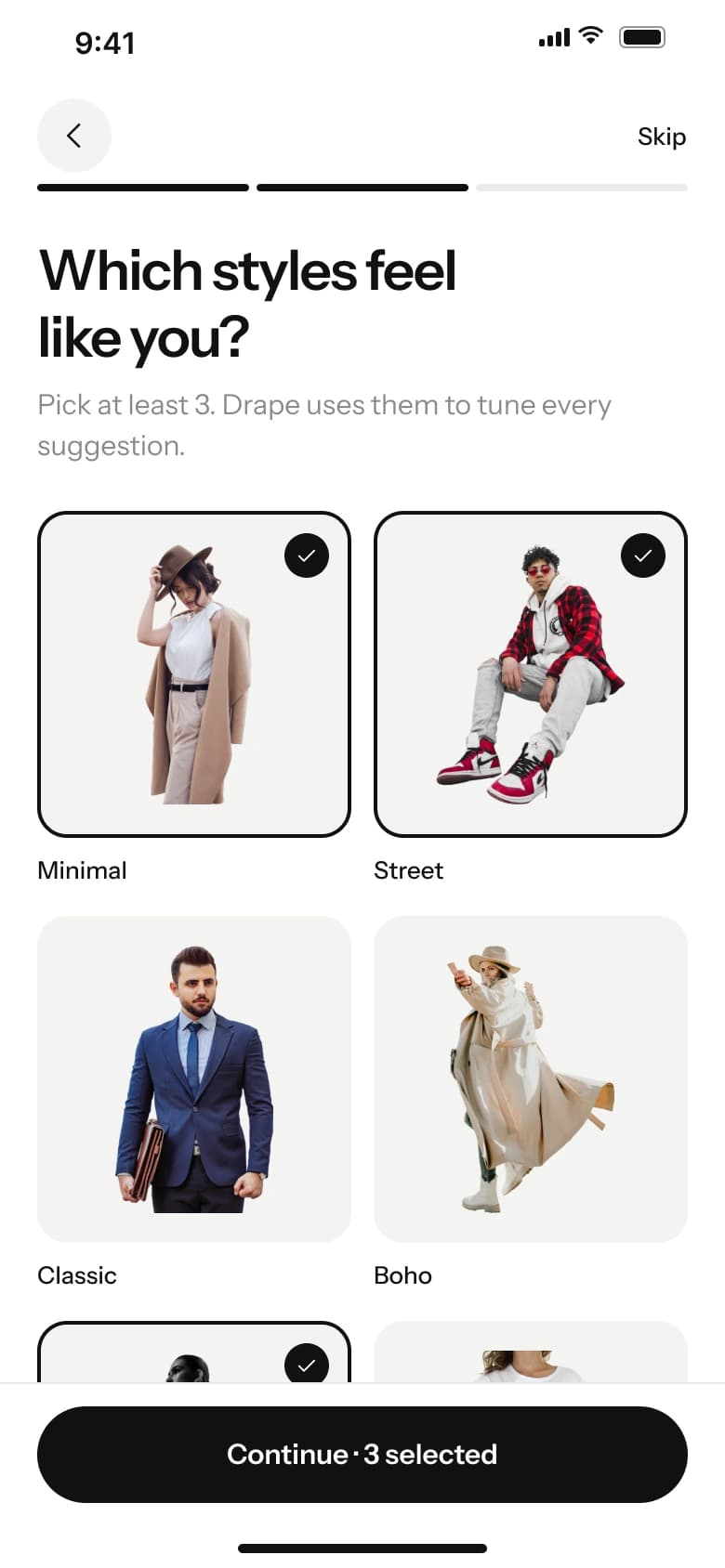
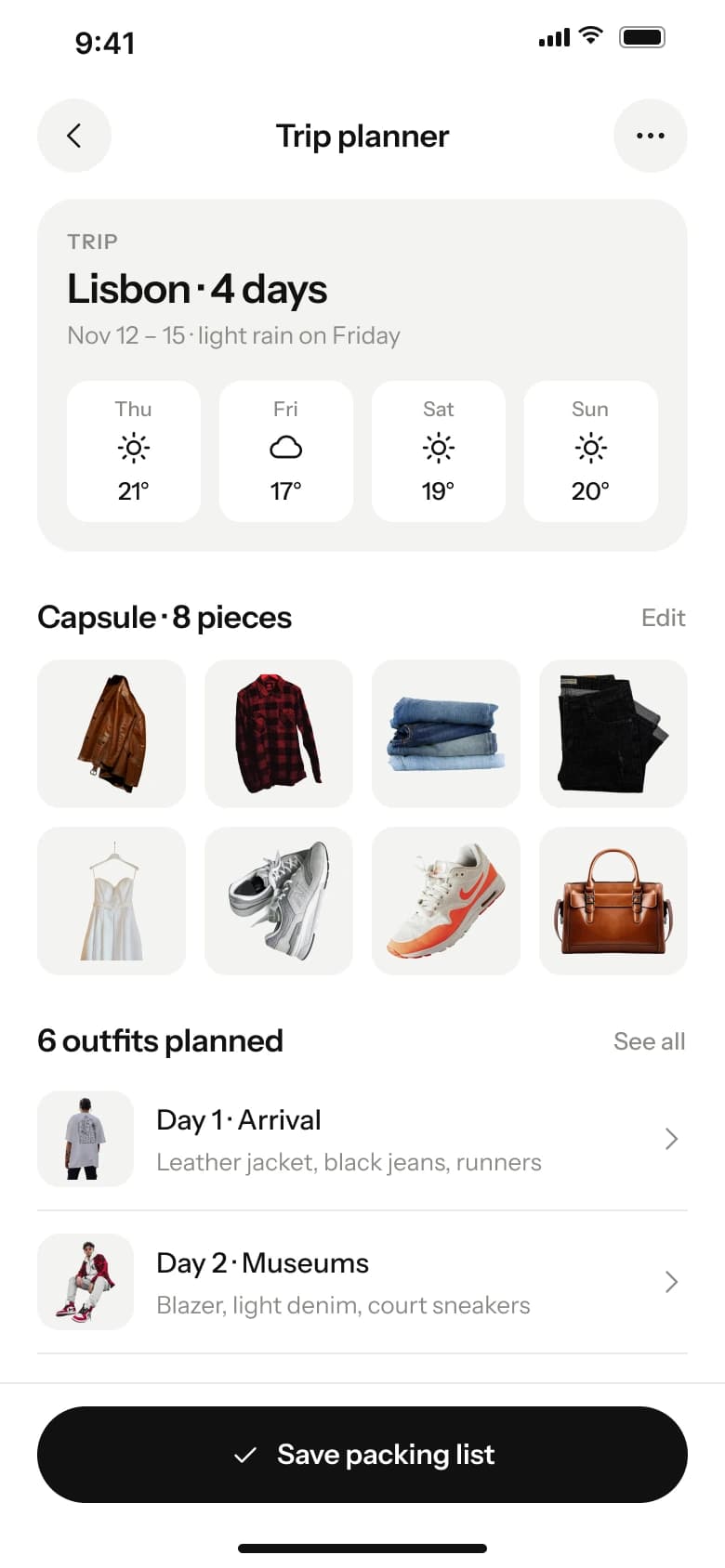
I tested five directions — two editorial serifs, a dark noir, a Swiss index and a soft studio — and chose Studio: white space, grey trays and background-free cut-outs, with ink as the only accent so any style, from streetwear to tailoring, looks right. Primary actions sit in the thumb zone and every AI moment carries the same sparkle.
Onboarding & first outfit
AI extraction
Wardrobe
Outfits & calendar
Stylist & insights

05
What I learned
With AI in the loop, trust comes from showing the work. Visible detection boxes, match confidence and a clear “why this look” turn a black box into a stylist you can correct.